Burnout
Burnout
Are you feeling stressed out, worried, physically and/or emotionally exhausted–overwhelmed?
Does the stressful feeling of overwhelm persist without relief? Do you feel that regardless of what you do, you just can’t shake the emotional burden?
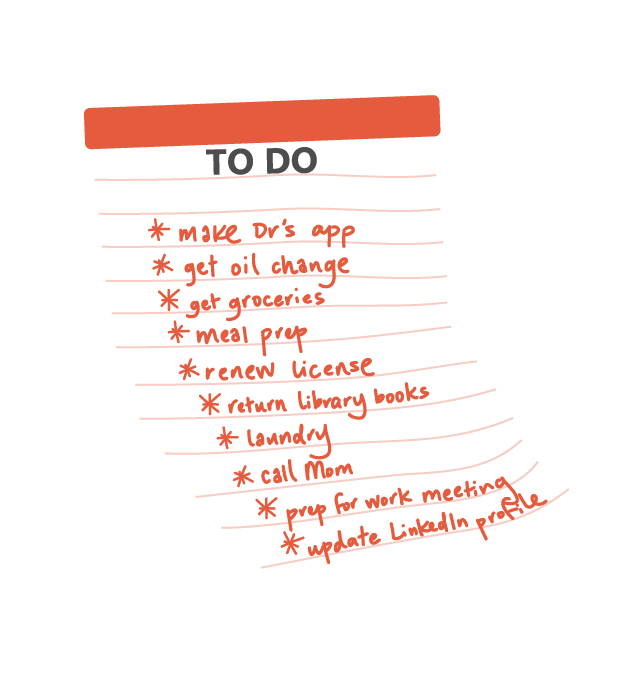
Perhaps you feel as though your life is so demanding that you have no time or even the opportunity to recover. If you’re feeling exhausted, lacking energy, consistently sluggish, and/or unmotivated, you could be experiencing burnout.
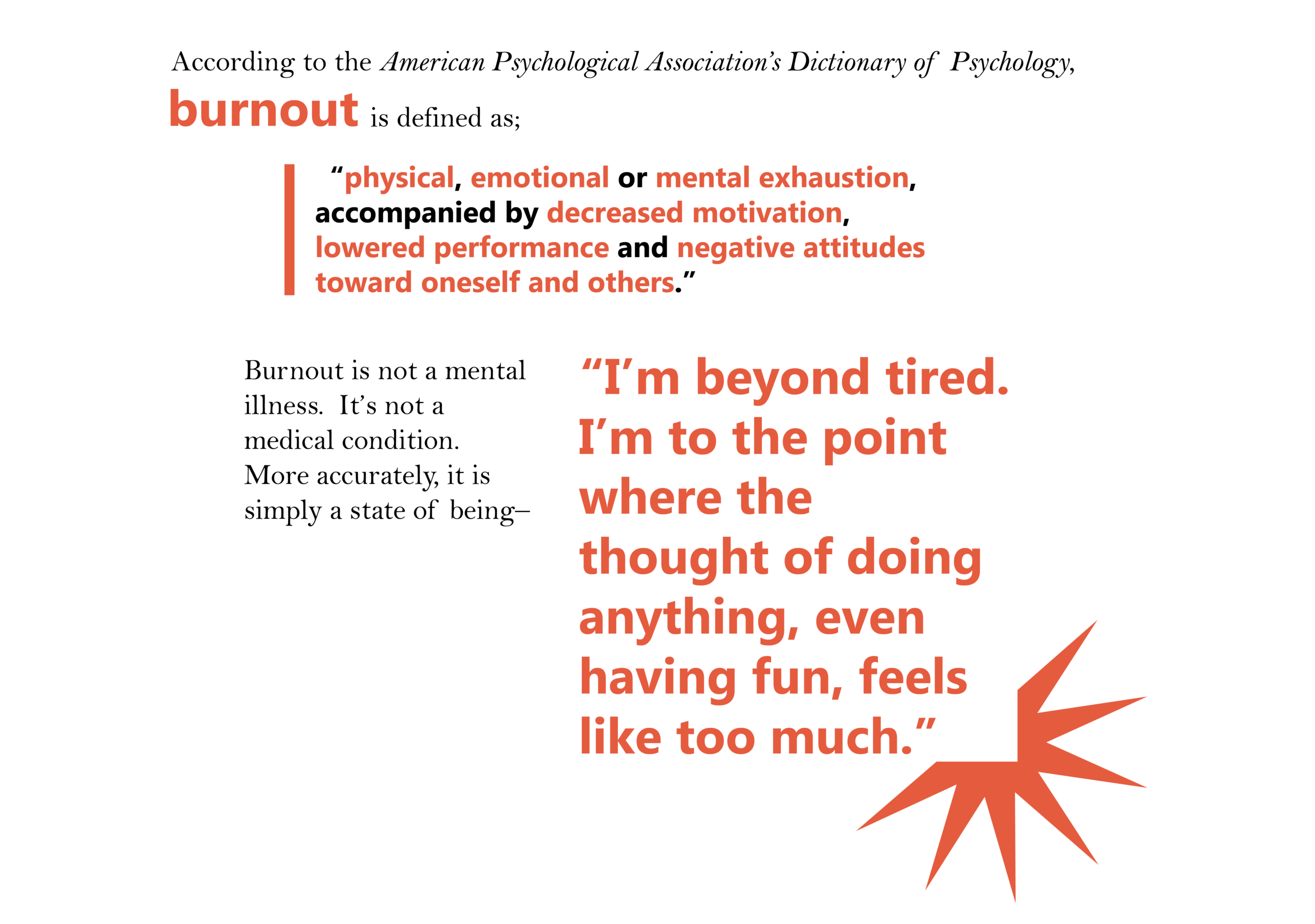
Although burnout is often associated with work, it can be the result of lifestyle in general. Even more, burnout can affect one’s overall health and wellbeing in a variety of ways. The good news about burnout is that it is absolutely manageable. We at Stone Labyrinth Counseling & Wellness are prepared to help!
FAQs: Basics
What are the signs of burnout?
- Often, the signs of burnout look and feel much like depression and anxiety.
- Emotional symptoms: apathy, hopelessness, powerlessness, irritability, lack of focus and motivation. Generally speaking, burnout can be summed up as having a negative mindset about just about everything.
- Physical symptoms: extreme fatigue, headaches, nausea and lack of appetite, sleeplessness, muscle tension and soreness.
- Performance symptoms: isolation, avoidance of tasks, absence from responsibilities, failure to meet deadlines, lack of commitment at work and/or home.
- Often, the signs of burnout look and feel much like depression and anxiety.
Is there a difference between burnout and depression?
- Yes! Although depression and burnout often look and feel the same, they are distinctly different from one another. Unlike Major Depressive Disorder, burnout typically stems from a specific set of circumstances and/or environment. For example, work/career demands can lead to feelings of burnout. Parenthood can also lead to feeling burnout. Athletic and/or academic demands can lead to burnout in children.
- Major Depressive Disorder is not typically tied directly to one specific set of circumstances. While taking a break from the source of burnout will often bring a sense of relief, that is often not the case with depression.
What is self-care?
- This is the golden question! Essentially, the question is “How do I love myself?” That can often feel like a challenging question, too. Maybe it would be helpful for us to think about self-care from an investment point of view? The most effective investors are those who can differentiate between an asset and a liability. Any investor would tell you that investing in liabilities is a bad idea.
- Liabilities–those things that break you down, strip away your power, reduce your ability to grow your wealth–your overall worth and value.
- Conversely, that same investor would encourage you to invest heavily in assets.
- Assets–those things that enrich you, lift you up, empower you to grow your wealth–your overall worth and value.
- Self-care is rooted in the belief that “I am an asset; one who has tremendous worth and value. I am lovable.” Believing this about oneself is the root of self-care. And caring for anything is all about providing it with what it needs to flourish–to grow into its greatest potential. To that point, self-care is a unique experience for each of us. We’re all different; therefore, we all have our unique needs.
- Something to think about when it comes to self-care is the difference between outside-in and inside-out self-care. Both can be replenishing to the mind, body, and spirit. The biggest difference between the two is the fact that inside-out self-care can be done more consistently, even daily. Moreso, inside-out self-care allows one to focus more thoroughly on oneself–thoughts, emotions, behaviors. Inside-out self-care allows us opportunities to practice controlling these things. Outside-in self-care is a more passive form of self-care, and its effects can be more short-term in nature. Furthermore, inside-out self-care can be seen as a better investment because, not only does its effects tend to be more long-term in nature, inside-out self-care is free of cost for the most part. To the contrary, outside-in self-care typically comes at a pretty high price.
- Outside-in:
- Warm bath
- Massage
- Manicure/Pedicure
- Spa day
- Salon day
- Golfing with friends
- Night out with friends
- Inside-out:
- Counseling/Therapy
- Distraction-free quite time
- Reading
- Gratitude walk
- Beauty walk
- Meditation
- Journaling
- Mindfulness exercises
- Breath work
- This is the golden question! Essentially, the question is “How do I love myself?” That can often feel like a challenging question, too. Maybe it would be helpful for us to think about self-care from an investment point of view? The most effective investors are those who can differentiate between an asset and a liability. Any investor would tell you that investing in liabilities is a bad idea.
What leads to burnout?
- In essence, anything can lead to feeling burned out. That said, like most things, the answer is typically not just one thing. More often than not, what leads to burnout is an extended period of time under stress–undesirable circumstances. We are consistently flooded with information these days. Most of us carry a phone on our person all day long. If it’s not in our hand or pocket, it’s typically within arm’s reach. It buzzes; it beeps; it chimes; it cha-chings; it rings all day long. It flashes headlines from around the world. It updates us on scores from around all the leagues. It invites us to gamble, amongst all kinds of other unsavory behaviors. It’s unrelenting. And that’s just the phone that we all consciously choose to carry with us every single day. Our televisions do the same thing. So do our radios. When was the last time you sat down to do a little quiet scrolling, or watch a little TV, or listen to a little music without having an ad of some sort pop up? We are being preyed upon daily.
- All of that said, we haven’t even touched on the fact that we have a massive pyramid of other more important personal daily responsibilities: a spouse/partner, children, career, house, groceries, dinner, bills, bank accounts, friendships, extended family…you get the point. The list just keeps going and going and going. So again, you asked, “What leads to burnout?” All of the above.
- The good news is that when you take a look at that list, it’s actually full of wonderful things. That would suggest that it’s not actually the list of things that causes the feelings of burnout. More likely, it’s probably the way that we are thinking about our pyramid of responsibilities. We at Stone Labyrinth Counseling & Wellness are prepared to help you reframe that overwhelming mindset. Contact us to schedule an appointment today.
Is burnout the same for everyone?
- No. Like most things in life, our experiences are unique to us. That said, it’s important to understand that if you are experiencing burnout, you are not alone!
FAQs: Treatment
Is burnout treatable?
- Absolutely! In large part, managing feelings of burnout can be boiled down to three things:
- Paying attention to yourself on purpose.
- Establishing the intention for being fully grounded in the present moment.
- Minimizing/Eliminating judgement.
- The present moment is always a bountiful place. It’s full of beauty, love, and reasons for gratitude. When grounded in the present moment, you can typically find yourself in a place of neutrality, safety, and even pleasantness. In this position, it is much easier to be aware of any judgement you may be hurling–at yourself, at others, and/or about things or circumstances, in general. In a word, this is to be “Mindful.”
- Being “Mindful” is quite different from being “mind full.” Essentially, feelings of burnout stem from the mind being flooded with thoughts, all of which bring along their own emotion, or set of emotions. In other words, the mind is FULL of thoughts, leaving one feeling overwhelmed as if drowning in tumultuous waters–a storm of uninvited thoughts and emotions, which can often lead to uncharacteristic behaviors. Extended periods of time in these conditions is what leads to the burnout–feelings of exhaustion, hopelessness, and powerlessness.
- Some helpful questions to ask yourself when working to be more mindful:
- What sounds can I hear right now?
- What is the quietest sound I can hear right now?
- What aromas can I smell right now?
- What in my immediate environment reflects evidence of love?
- Where are the colors of the rainbow in my immediate environment?
- How many different shapes can I find in my immediate environment?
- What is the texture of the ground beneath my feet right now?
If I'm feeling burned out, do I need to quit my job?
- No! Remember, burnout is the result of extended periods of time under undue stress, which leaves us feeling trapped, overwhelmed, and apathetic. In times like this, it’s important to remember that what we actually need is quite simple: water, oxygen, nutrition, shelter, and a little compassion probably wouldn’t hurt. But to think that we need to quit our job is likely just one of the many negative thoughts flooding the mind in a time of overwhelm.
- That said, it may be a worthwhile exercise to reflect on how things are going for you at work. If, in doing so, you conclude that your job is a direct source of your feeling burned out, perhaps taking some time off from work would be helpful. Time away from anything that is causing undue stress allows for the opportunity to singularly focus on that which is most important: self-care.
Can burnout make me feel sick?
Yes! Burnout can lead to a variety of emotional and physical symptoms, leaving one feeling sick–exhausted, weak, achey, nauseous, and more. Please read the answer to “What are the symptoms of burnout?” above.
What helps with feelings of burnout?
- We at Stone Labyrinth Counseling & Wellness always encourage our clients to remember that “The pyramid of care begins with self-care.” You can read more about self-care above. Also, please take some time to read through the answers to the other FAQ’s above. Collectively, they all work to answer this question.
 English