Cognitive Behavioral Therapy (CBT)

What if you actually have more control over your world than you tend to think?

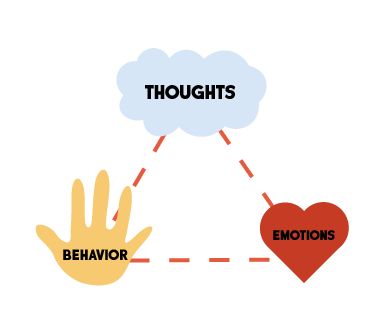
Cognitive Behavioral Therapy (CBT) is a structured approach to talk therapy that empowers clients by helping them understand the correlation between their thoughts, emotions, and behavior. 
CBT is an effective modality in the treatment of a variety of issues, including depression, anxiety, substance abuse, marital issues, eating disorders, and other severe mental illnesses.  Unlike many other modalities of psychological treatment, CBT has been extensively studied, rendering a tremendous amount of scientific evidence that the modality actually produces positive change in the lives of those being treated. 
Ultimately, Cognitive Behavioral Therapy is a great way for one to improve day-to-day functioning and overall quality of life.
4 Core Principles of Cognitive Behavioral Therapy (CBT)

1

One’s psychological issues stem from unhealthy patterns of thought.

2

Unhealthy patterns of thought coexist with unhealthy patterns of emotion.

3

One’s unhealthy patterns of thought & emotion eventually manifest in unhealthy patterns of behavior (AKA: actions).

4

One who is suffering psychological issues is capable of reframing unhealthy thought and emotional patterns, thereby revising behavior and creating a healthier, more productive life.

How Does Cognitive Behavioral Therapy Work?

Metacognition–the process of thinking about one’s own thinking:

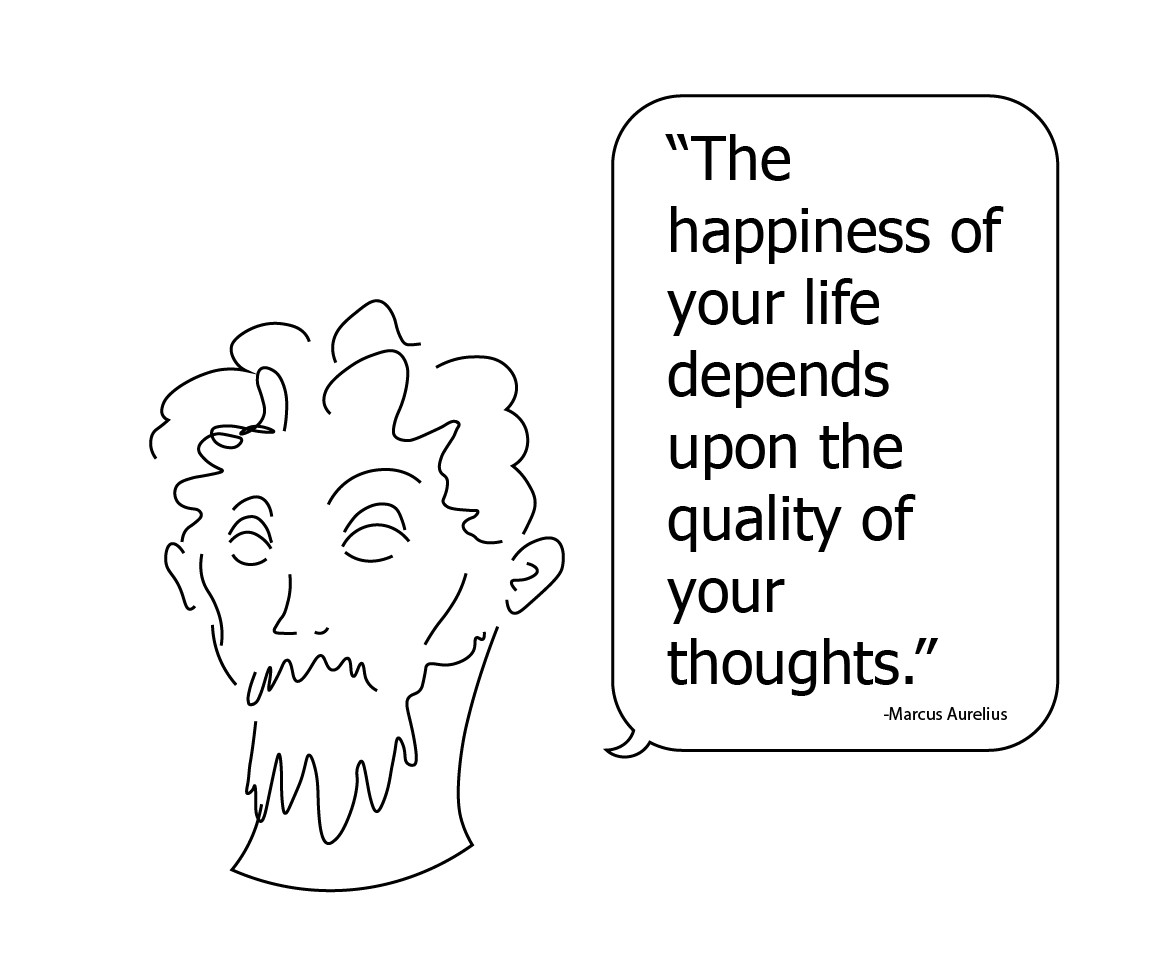
Marcus Aurelius borrowed from ancient Stoic Philosophy when he wrote, “The happiness of your life depends upon the quality of your thoughts.” 

In other words, your thoughts control your world.  According to this philosophy, changing the way you think about the world, changes the world in which you live.  The good news is that you actually have control over your thoughts.  Although you may not have much control over what is going on around you in the world–outside noise–you always have 100% control over how you choose to think about it, feel about it, and behave toward it. 

As it relates, Aurelius also wrote, “You have power over your mind–not outside events.  Realize this, and you will find strength.”  This is the essence of Cognitive Behavioral Therapy (CBT).

So, Once Again, How Does Cognitive Behavioral Therapy Work?

CBT works on the mind in the following ways:

It helps you learn to recognize distorted, unhealthy thought patterns.

It helps you accurately recognize the fact that distorted thought patterns are rooted in a time other than the present moment (e.g.: the past or future).

It helps you recognize how the distorted thought patterns are creating problems in your life (e.g.: stress, anxiety, depression, obsession, compulsivity, agitation, frustration, anger).

It helps you reframe the distorted, unhealthy thought patterns into clearer understanding of reality–the present moment.

It helps you develop a clearer understanding of the behavior or others.

It helps in the development and adoption of healthy coping skills, making it easier to face challenging circumstances that previously felt overwhelming, or flat out impossible.

It helps you foster a greater sense of confidence in yourself, leading to stronger feelings of motivation and self-esteem.

CBT works on the body in the following ways:

It helps you revise unhealthy behavioral patterns.

It can help you face your fears with confidence rather than avoiding them.

It helps with emotional regulation in the face of adverse circumstances (e.g.: communicating with others, taking a test, performing in front of a crowd, attending a family holiday).

It helps you physically relax feelings of stress, tension, and agitation.

It helps you release trauma that has been stored in your body for lengthy periods of time, often leading to undue frustration and outbursts of anger.

A Collaborative Approach to Therapy

Cognitive Behavioral Therapy (CBT) is a casual and collaborative process between the client and the therapist.  The process allows them to work together to untangle distorted, unhealthy thoughts, emotions, and behavior. 

Furthermore, the client and therapist work together to reframe the distortions into clearer, more accurate understanding of reality–the present moment.  Cognitive Behavioral Therapy (CBT) ultimately aims to help clients live an independently healthy and happy life. 

You Actually Have More Control Than You Might Think

In the end, Cognitive Behavior Therapy empowers clients to live comfortably and confidently in the world.  In working closely with a CBT therapist, clients can anticipate experiencing a variety of exercises in sessions and out of sessions that help foster healthy coping skills, which embolden clients to revise their thinking, manage their emotions, and control their behavior in their day-to-day life.  CBT helps clients ground themselves in the present moment where they have all of their power and agency, rendering past trauma and experiences powerless over their life. 
en_USEnglish