EFT Tapping

What if you could slow down, connect with what you’re feeling, and give your body a different experience?

Emotional Freedom Techniques (EFT), often called EFT tapping, is a mind-body approach that combines gentle tapping on specific points on the body with focused attention on thoughts, emotions, physical sensations, or experiences that feel difficult.

EFT tapping can be used as a complementary technique within therapy to help bring awareness to what is happening emotionally and physically. For some people, having something physical to focus on while talking about a difficult experience can make it feel more manageable.

Bringing Your Attention to What You're Feeling

When something is bothering us, we don’t always know exactly what we’re feeling. We may simply know that we’re tense, overwhelmed, anxious, angry, or stuck.

EFT tapping provides an opportunity to slow down and notice what is happening.

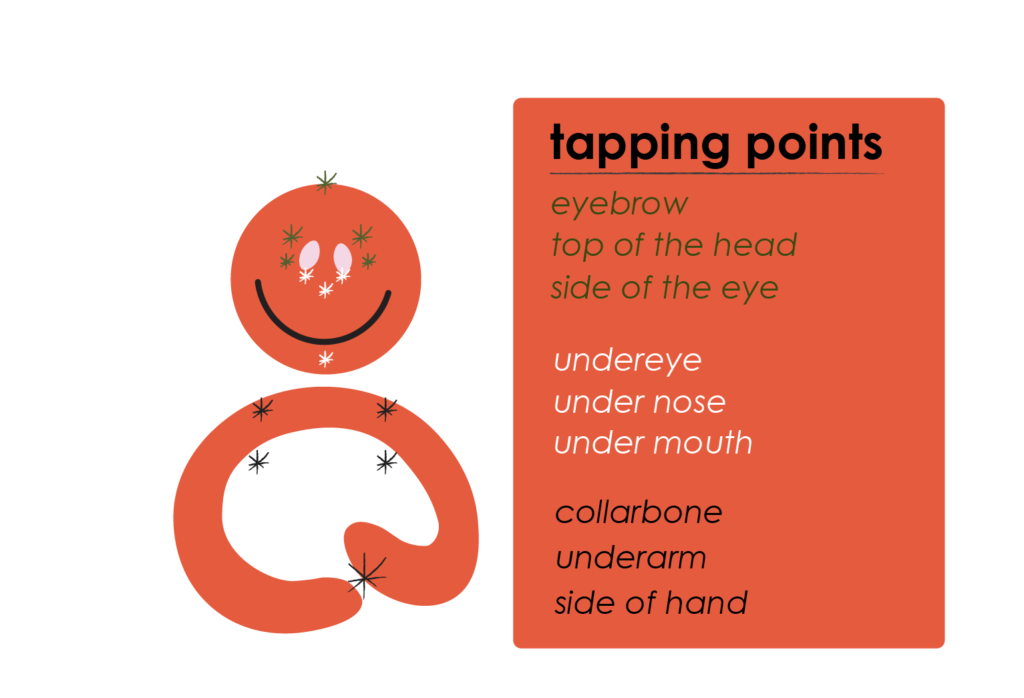
A person may focus on a specific thought, emotion, memory, or body sensation while gently tapping through a series of points, often on the face and upper body.

The process can create a moment to pause and acknowledge:

“This is what I’m experiencing right now.”

Rather than pushing an emotion away, EFT encourages bringing gentle attention to it while staying connected to the present moment.
EFT Tapping and Emotional Regulation

When we’re emotionally activated, it can be difficult to access the part of us that knows how to respond thoughtfully. Tapping can be used as one tool to help create a pause during moments of stress or emotional intensity.

It may be incorporated into therapy when working with anxiety, stress, emotional overwhelm, difficult memories, self-criticism, fear, or other uncomfortable emotions.

The intention isn’t to force an emotion to disappear. Instead, tapping can provide another way to approach an experience with curiosity and compassion.

What Does EFT Tapping Feel Like?

There is no particular feeling you’re supposed to have while tapping.

Some people notice that their thoughts become clearer. Others become aware of physical sensations, emotions, memories, or shifts in how intensely they are experiencing something.

Sometimes an experience may feel different simply because there is now space to slow down and pay attention to it.

The process is individualized, and there is no expectation that someone needs to “tap away” an emotion or achieve a particular result.

EFT and Self-Compassion

EFT tapping can also be paired with compassionate statements that acknowledge what a person is experiencing.

For example, someone might gently tap while recognizing:

“I’m feeling really overwhelmed right now.”
“A part of me is afraid.”
“This is difficult, and I’m doing the best I can.”
“I can acknowledge how I feel without judging myself for feeling this way.”

This can create a different internal experience than immediately criticizing ourselves for having the emotion in the first place.

EFT Tapping as a Mind-Body Practice

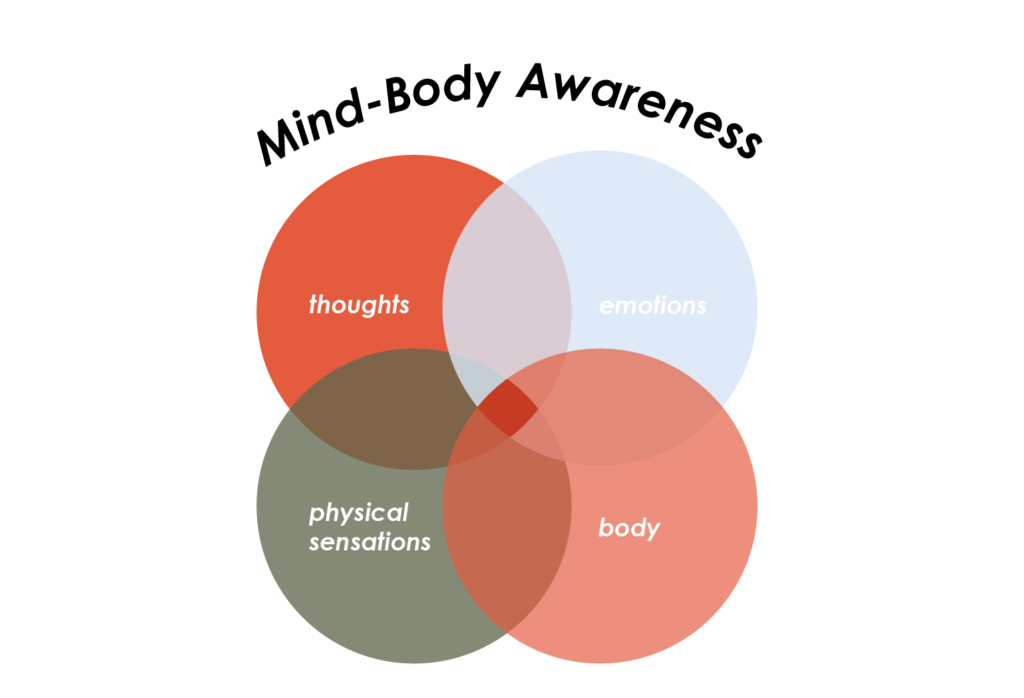
One of the reasons EFT can fit naturally into a mind-body approach to therapy is that it doesn’t ask us to focus only on our thoughts.

It brings attention to thoughts, emotions, physical sensations, and the body at the same time.

For someone who tends to live primarily “in their head,” this can provide an opportunity to reconnect with what is happening physically and emotionally.

For someone who feels overwhelmed by emotions, the physical practice of tapping can provide an anchor while exploring what is underneath the reaction.

Finding What Helps You Feel More Grounded

EFT tapping is one tool among many that may be incorporated into therapy. It can be used alongside approaches such as mindfulness, breathing techniques, somatic practices, Brainspotting, DBT, and parts work.

The goal isn’t to find one technique that works for everything.

It’s about developing a greater understanding of what helps you feel grounded, connected, and able to move through difficult experiences with greater awareness.

Sometimes healing begins by simply slowing down enough to notice what you’re feeling—and meeting that experience with curiosity rather than judgment.
en_USEnglish