Psychoeducation in Therapy

Sometimes understanding what is happening can be the first step toward changing it.

Have you ever wondered, “Why do I react this way?” or “Why do I know what I should do, but I just can’t seem to do it?”
Psychoeducation is a part of therapy that helps connect the dots between what you’re experiencing and why it may be happening.

Rather than simply talking about a problem, psychoeducation provides information and language to help make sense of thoughts, emotions, behaviors, relationships, and physical responses. Understanding what is happening can make an experience feel less confusing and, sometimes, less overwhelming.

Understanding Your Mind and Body

Our thoughts, emotions, behaviors, and bodies are constantly influencing one another.

For example, anxiety isn’t just something that happens in your thoughts. You might notice your heart racing, your stomach tightening, difficulty breathing, racing thoughts, or an urge to avoid whatever feels uncomfortable.

Understanding the connection between these experiences can help you recognize what is happening rather than wondering, “What’s wrong with me?”

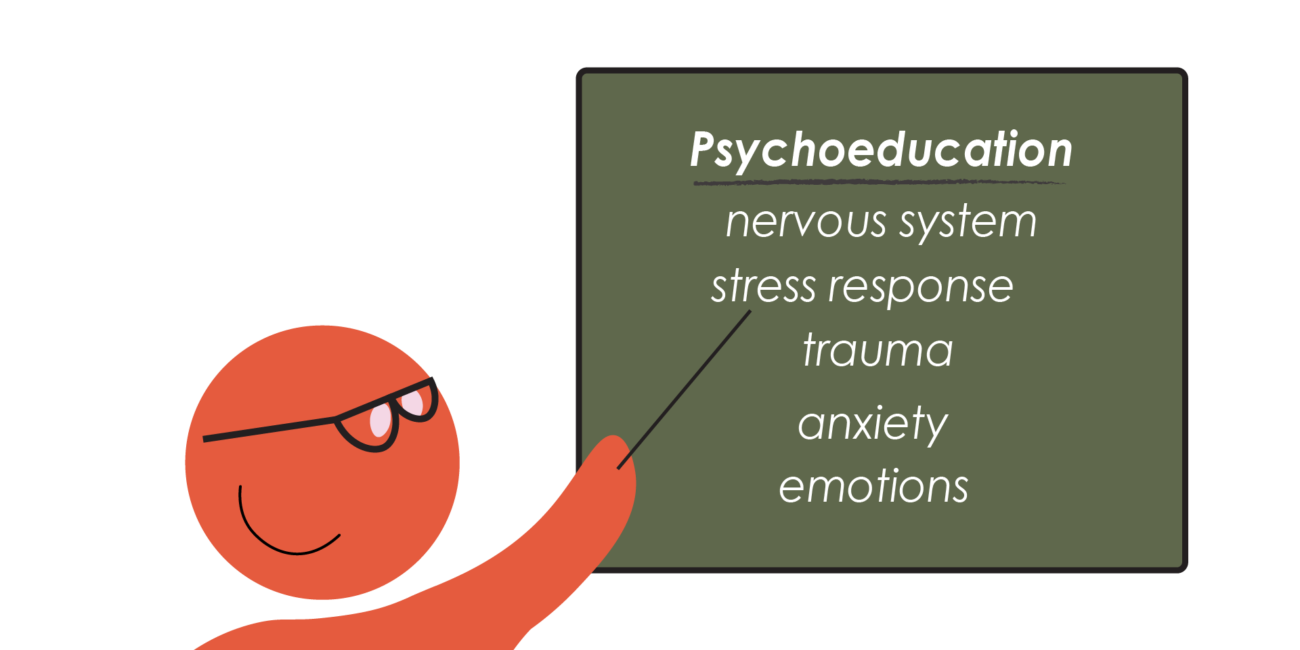
Psychoeducation may include learning about the nervous system, stress responses, trauma, anxiety, emotions, attachment, boundaries, communication, coping patterns, and relationship dynamics.

The goal isn’t to give you a textbook explanation of your experience. It’s to help you understand your experience.
Turning “What’s Wrong With Me?” Into “What’s Happening for Me?”

When we don’t understand our reactions, it can be easy to judge ourselves.

You might think:

“I’m too sensitive.”
“Why do I keep making the same mistakes?”
“I should be over this by now.”
“Why can’t I control my emotions?”

Learning about the ways the brain and nervous system respond to stress, relationships, and difficult experiences can provide a different perspective.

Instead of seeing yourself as broken or failing, you may begin to recognize that your responses developed for a reason.

That doesn’t mean every behavior is helpful or that change isn’t possible. It means there is an opportunity to understand the pattern before deciding what you want to do differently.

Connecting the Dots

Psychoeducation can help make connections between things that may not initially seem related.

For example, understanding the nervous system may help explain why you become overwhelmed during conflict. Learning about attachment may help make sense of patterns in relationships. Learning about emotional regulation may help explain why certain situations feel much bigger than others.

These connections can provide a starting point for change.

Once you understand a pattern, you have more information to work with.

Psychoeducation is Collaborative

Psychoeducation isn’t about a therapist telling you what is wrong with you or giving you a diagnosis and sending you home with a list of information to read.
It’s a collaborative process.
Questions, curiosity, personal experiences, and observations all have a place in the conversation. Information is introduced in a way that connects to what you’re experiencing and gives you an opportunity to decide what feels meaningful and useful.
Sometimes learning one small piece of information can change the way you understand yourself.

Knowledge Can Create Choice

When we can recognize what is happening, we have more opportunities to decide how we want to respond.

You may begin to notice, “I’m getting overwhelmed.”

Or, “This is one of my old patterns showing up.”

Or, “My body is telling me I don’t feel safe right now, even though I know I’m okay.”

That awareness can create a pause—a place where a different response becomes possible.

Psychoeducation isn’t about having all the answers. It’s about having enough understanding to become more curious about yourself and more intentional about the choices you make.

Understanding yourself doesn’t mean that everything suddenly becomes easy. But sometimes, when your experiences finally make sense, you can stop fighting against yourself and begin moving toward meaningful change.
en_USEnglish